
Chatbots in food ordering in 2025: practical advice for AI customer service | Part 2
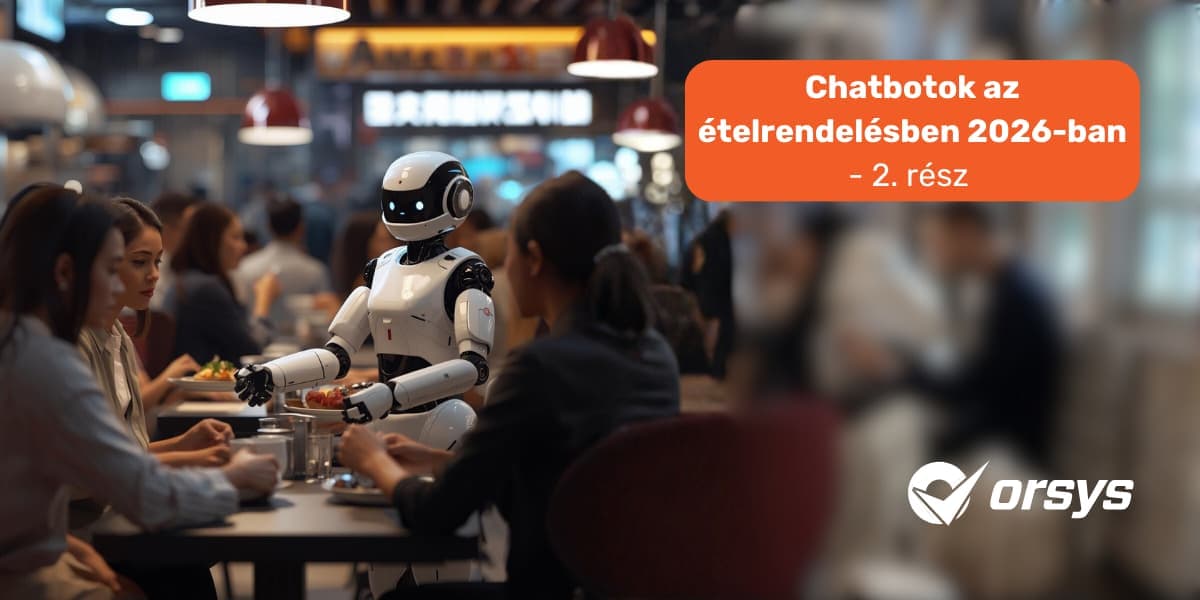
Hospitality's development in 2025 demands that restaurants improve their digital operations. Customer service is where chatbots and AI solutions can deliver the most visible results.
Consider familiar situations: one employee handling phone calls at peak times while also serving guests on site, or twenty calls arriving almost simultaneously at lunchtime. At these moments, restaurants lose both revenue and guests. International analyses suggest AI will handle 50% of restaurant customer interactions in the near future. This is tangible reality, not a prediction.
Yet many Hungarian restaurant managers remain sceptical about AI. They worry about losing personal contact, robotic voices or complex integration. This article explains why those concerns are unfounded. A well-implemented AI system does exactly what every restaurant owner wants: it frees valuable staff time for real, quality hospitality.
Part 3: A step-by-step chatbot implementation guide, continued
Step 6: Launch and monitor
After successful testing, launch on a limited basis. Start with a chatbot only on your website, for example, or enable voice AI only at night. This reduces risk.
Continuously monitor these measures:
- How many guests use the chatbot?
- How many successful orders does it generate?
- How often does AI fail to understand a request?
- How does average order value through AI compare with a human operator?
ORSYS software logs these data automatically, making performance easy to track.
Part 4: Chatbot design basics
AI personality and brand voice
AI communication should not sound mechanical. "Order processed. Payment required. End." is off-putting. A good restaurant chatbot has some personality.
- Bad example:
- Guest: Hi, I'd like a pizza.
- AI: Pizza. Size? Topping?
- Good example:
- Guest: Hi, I'd like a pizza.
- AI: Hi, great choice! Do you know which pizza you would like, or shall I list the options?
Context and memory
Advanced AI remembers previous interactions. If Peti orders a salami pizza today and calls again tomorrow, the system can greet him, according to preferences and settings: "Hi Peti! Your usual salami pizza today, or would you like something new?"
This requires access to CRM data or past order history. Some restaurant chatbots include this function.
Error handling and human intervention
What happens when AI does not understand an order? It should hand the task smoothly to a human operator.
Good systems handle it like this:
- Guest: I'd like something with chicken... yes, and make it spicy.
- AI: I did not quite understand. Please choose one of these options or ask a colleague for help.
- Spicy chicken pizza
- Buffalo chicken wings
- Thai chicken salad
- I'd like to speak to a human operator!
Part 5: Common mistakes to avoid
- Too many functions at once
Do not try everything at the beginning! People often expect AI to photograph dishes, recommend wine with dinner and predict the weather. Start with taking orders and answering general questions. - An outdated menu
If AI recommends a dish you stopped serving two years ago, it will damage trust. Keep the menu current and check it at least weekly! - Lack of staff support
If colleagues do not understand the system, they cannot handle issues such as "Why did AI take such a strange order?" Teach the team the basics. A 30-minute demonstration can work wonders. - Overly long messages
Guests will not finish reading long, complicated messages. Keep them concise. The ideal reply is one or two sentences. - Ignoring data
AI generates plenty of useful data. Use it! If many guests ask about gluten-free options, add a shortcut button or clear menu information. If many want to customise pizzas, offer more toppings.
Part 6: AI return on investment, realistic figures
Introducing a chatbot costs money, sometimes a lot, but the return is guaranteed too.
Revenue:
- Recovering lost orders: International averages suggest AI retains 85% of guests who would otherwise hang up because the line was busy. For a medium-sized restaurant, that means an average of HUF 30,000-55,000 in extra monthly revenue.
- Upselling: AI consistently suggests extras, such as dessert with pizza. This can increase average order value by 15-25%.
Costs:
- Staff savings: Fewer telephone tasks mean lower wage costs, potentially several hundred thousand forints per month for a restaurant.
- Staff efficiency: Employees have more time for guests, serving and setting tables, instead of watching the phone.
For an average restaurant, a chatbot implementation pays for itself in 6-8 months.
Part 7: AI trends in 2025
- More advanced natural language processing: NLP keeps improving. AI understands nuance as well as literal requests. "I'd like something light," for example, can prompt suggestions for refreshing, lighter dishes such as salads.
- Progress in voice AI: Speech recognition has improved enormously. Background noise and different accents no longer pose obstacles. AI tested at McDonald's already operates above 90% accuracy.
- Multilingual support: A single AI system can support as many as 20 languages, ideal for tourist locations and restaurants with many foreign guests.
- Integrated analytics: AI takes orders and performs detailed analysis. Which dishes are most popular? When is business strongest? What does each guest group buy most often?
Part 8: An implementation checklist to get started
Made your decision? Follow this practical checklist:
- Week 1: Preparation
- Choose an AI solution.
- Request a quote. Most companies offer a free demo.
- Appoint an employee to lead the project.
- Weeks 2-3: Setup
- Integrate the POS system.
- Upload the menu and prices.
- Teach AI basic questions about opening hours, delivery times and so on.
- Week 4: Testing
- Ask 5-10 friends or colleagues to test it.
- Collect feedback on what works and what does not.
- Refine the system accordingly.
- Week 5: Soft launch
- Activate the chatbot on your website or Facebook, initially with text functions only.
- Tell staff and regular guests about the new option.
- Check operation daily during the first week.
- Weeks 6-12: Optimisation
- Track the data. How many people order through AI?
- Make changes based on feedback.
- If the text chatbot performs well, try voice AI too.
Part 10: Keeping the human presence
Finally, the most important point: AI helps people with their work rather than replacing them.
Many owners fear AI will make their restaurant soulless, but that fear is unfounded. AI:
- Answers calls at night while you sleep.
- Handles repetitive questions while staff do other work.
- Records data more accurately than a person.
But AI does not:
- Cook the food.
- Clear the table.
- Smile at guests.
The future starts now
In 2025, AI chatbots are no longer a distant technological possibility. They are part of the present.
Implementation is not terribly complicated or unaffordable, and it does not remove the appeal of personal service. Properly configured AI multiplies your restaurant's capacity and frees some of your staff's valuable time.
Enjoyed the article? Share it and read the next one too!
Last updated:
Do you need professional software?
Try it without commitment and request our free demo.
- Simple to use and quick to learn,
- Professional solutions for every size,
- Saves time and energy for you and your team.