
Kitchen, team and stories: short-form video as an essential restaurant marketing tool
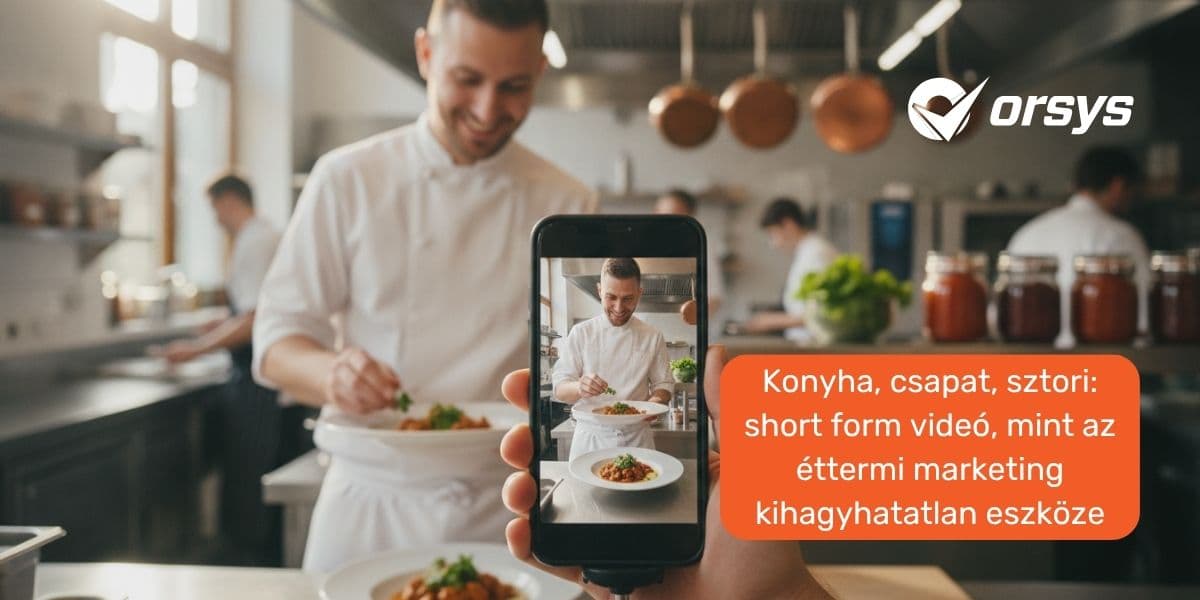
Kitchen, team and stories: short-form video as an essential restaurant marketing tool
Short video content is now one of the most effective ways to attract new guests to your restaurant. More than half of guests discover a new restaurant through social media at least once a month, often through short videos. TikTok, Instagram Reels and YouTube Shorts have become a core part of restaurant marketing, especially if you target a younger audience.
Below, we explain how to build a deliberate, revenue-generating video strategy using behind-the-scenes content, user-generated content, micro-influencers and some data-based thinking.
Why does short video work so well?
Short videos of 15–60 seconds are now central to social media communication. Global data suggests that more than 90% of users regularly watch short videos, mainly on TikTok, Instagram and similar platforms.
Some key facts:
- TikTok controls roughly 40% of the short-video market, while Instagram Reels and YouTube Shorts each hold around 20% in many markets.
- About 70% of viewers decide within the first few seconds whether to keep watching, making the opening hook critical.
- Restaurants using short video regularly see audience growth averaging 2–3 times faster.
- Guests increasingly want short, easy-to-watch visual stories to understand your food, atmosphere and experience.
Where should you be present? TikTok, Reels and Shorts
TikTok is one of the fastest-growing platforms. Originally a space for younger people, it now reaches broader age groups, including restaurant-goers with spending power. Its algorithm recommends content based on interests, so even a restaurant with few followers can reach thousands through a successful video. It is an important platform, but if you are not yet active on more established channels such as Facebook and Instagram, or your community building is ineffective, jumping into TikTok content may not be the best idea.
Instagram Reels can build on your existing Instagram photo posts and followers. Short, dynamic videos outperform static images, and restaurants are strongly encouraged to build a video-based feed.
YouTube Shorts generates enormous viewing figures. Short videos have already exceeded 5 trillion combined views globally. You can give guests searching on YouTube a taste of your restaurant's atmosphere and cut short clips from longer videos.
Practical advice: You do not need three separate strategies. Think of a short-form package. With thoughtful editing and minor adjustments, one vertical video can appear on all three platforms.
Which videos work best for restaurants?
International statistics suggest guests respond most strongly to:
- Preparation: chopping, frying, plating and slow-motion "food porn" scenes
- Behind-the-scenes moments: kitchen life, mise en place and the pre-shift atmosphere
- Staff stories: introducing the chef, barista or server
- Atmosphere videos: a terrace at sunset, a packed Friday evening or live music
- Local ingredient suppliers: visits to markets, farms or artisan producers
Behind the scenes
People love seeing how the food on their plate is made. Some ideas:
- A 15-second video of the chef assembling your signature burger
- The oven door opening, hot air escaping and a freshly baked pizza appearing
- A before-and-after shot, moving from an empty plate to the finished dish
The point is to communicate passion and care for the subject, without needing cinema-quality footage.
Suppliers and ingredients
Guests increasingly care where their food comes from. Show them:
- The local bakery supplying your sourdough bread
- The grower delivering your tomatoes
- A short interview asking, "Why do you work with this restaurant?"
These videos strongly increase trust and your brand's credibility.
Recipe and tip videos
People outside the industry are very interested in kitchen techniques. You need not reveal everything, just a small detail:
- "3 tips for crispy fried chicken at home"
- "How we make the perfect fried egg for a brunch plate"
This teaches viewers while quietly communicating that this level of quality is standard at your restaurant.
User-generated content and micro-influencers: why do they outperform traditional ads?
Short videos created by guests, known as UGC, and micro-influencer content often outperform traditional banners and stock-video ads in both engagement and conversions.
- More than 90% of consumers trust user-generated content more than a brand's own advertising.
- More than 90% of consumers prefer short videos when learning about a product or service.
Micro-influencers do not need to be nationally known celebrities. A food blogger or local TikTok creator with just 5,000–20,000 local followers may be much more relevant than a celebrity influencer. Advantages:
- Greater trust among followers
- Less expensive collaboration
- A local audience who can actually visit
How can you incorporate UGC?
- Ask guests to tag your restaurant and use a distinctive hashtag.
- Repost the best videos on your channel with permission.
- Run a UGC competition: "Post a video of your favourite dish on your page, tag us and win dinner for two."
What does a working short-form restaurant strategy look like?
Goals and audience
First clarify:
- What is the main goal: new guests, more deliveries, a stronger brand or busier weekdays?
- Who are you addressing: young people, families, fine dining enthusiasts or local residents?
You need different content for a young TikTok audience interested in street food than for strongly visual, atmosphere-focused Instagram Reels aimed at families.
Systematic content planning
Choose 3–5 content themes to avoid making videos at random:
- Kitchen and behind the scenes: mise en place, cooking and plating
- Team and stories: chef introductions, new colleagues and funny moments
- Ingredients and suppliers: markets, farms and artisan suppliers
- Guest experience and UGC: guest videos and reviews
- Offers and news: new menus, seasonal offers and limited dishes
This gives you a structure that helps prevent running out of ideas.
Technical basics: no film crew required
The good news is that you need neither a professional camera nor a crew. Most international guides say a decent smartphone, suitable lighting and clear sound are enough for effective short videos. The only addition we recommend to basic equipment is a stabiliser.
Format and length:
- Resolution: 1080×1920, vertical 9:16, the recommended TikTok and Reels format.
- Length: 15–30 seconds is the ideal range for engagement.
A hook at the start:
Because 70% of viewers decide within the first few seconds, begin with a strong opening line or visual:
- "3 things you didn't know about our breaded schnitzel..."
- "How the city's creamiest tiramisu is made, in 20 seconds"
Captions and music:
- Many users watch without sound, so add captions.
- Use popular music that fits your brand. TikTok music trends can increase reach.
When attention meets the numbers
Video content is useful and increasingly important, but by itself it only attracts attention. Real profit begins when you connect creative content to your operational system and figures.
ORSYS Restaurant Software provides real-time statistics and recipe-based price calculations. You can see how well each dish sells, its margin and how revenue changes after a campaign.
What does this mean for your short videos?
- If orders for a dessert or burger jump after a TikTok video, ORSYS sales and recipe data show the change in quantities and profit with numbers, rather than guesswork.
- Stock tracking warns when an ingredient is running low, so a successful video does not leave you saying "sorry, sold out" for half the weekend.
- If a Reel promotes a limited offer, such as one ending Sunday evening, ORSYS makes it easy to track the promotional period, changes in average basket value and whether it generated additional revenue.
Short-form content then becomes part of a deliberately measurable campaign, beyond simply a cool video.
Common mistakes to avoid
Only showing food... Food matters, but people want to see people. If your team, chef and atmosphere never appear, connecting with you becomes harder.
Videos that are too long and slow work poorly on short-video platforms. Fast, focused videos of 15–30 seconds perform best. A 60–90-second video already feels slower!
Random posting without a strategy will not deliver results. Posting once, disappearing for two months and then posting again is ineffective. International recommendations suggest at least 2–3 short videos a week so the algorithm and audience become accustomed to your presence.
No call to action. By the end of a video, people should know what to do:
- "Book a table using the link in our bio"
- "Order delivery on our own ordering website"
- "Vote: what should next week's dessert be?"
How does this actually bring more guests?
Short video content builds awareness, desire and brand recognition. To turn that into guests, pay attention to:
- Consistency: At least 2–3 videos a week, over several months.
- Focused messages: Give every video one purpose, such as a new dish, atmosphere, team or offer.
- A strong online presence: When people move from the video to your profile or website, everything should work there too, including an up-to-date menu and easy reservations or ordering.
- Measurement: See which videos bring the most views, saves and feedback, and adjust your content strategy accordingly.
If short videos attract interest while a professional system such as ORSYS helps you handle increased business profitably and with control, supported by specific figures rather than intuition alone, you are on the right track!
Last updated:
Do you need professional software?
Try it without commitment and request our free demo.
- Simple to use and quick to learn,
- Professional solutions for every size,
- Saves time and energy for you and your team.