
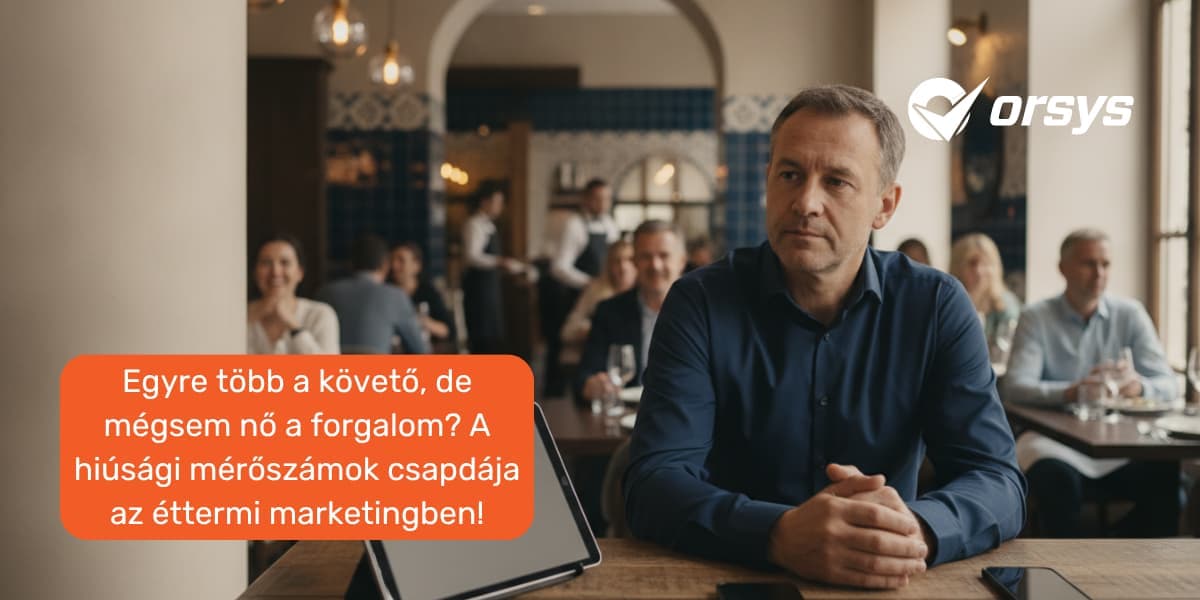
More followers but no sales growth? The vanity-metrics trap in restaurant marketing!
Imagine posting a brilliant, perfectly lit, slow-motion video of your new burger. Likes pour in, heart emojis fill the comments, people share the video and your following grows by 10% in one day. After closing, you sit back satisfied. Marketing is wonderful! But the next day, lunch rush and evening peak come and go, and nobody, literally nobody, orders the new burger...
Sound familiar? This reveals one of digital marketing's greatest illusions: the belief that lots of followers and likes automatically mean more guests.
This article explains why simply collecting as many followers as possible no longer works, why chasing vanity metrics is dangerous and how to turn passive scrollers into real guests who book tables.
What are vanity metrics?
Vanity metrics are figures that look good in presentations, marketers like quoting and you enjoy seeing, but that have no direct effect on revenue or real business goals.
They include:
- Social media follower counts
- Post likes and simple reactions
- Page views
- Raw video view counts, or impressions
These numbers are marketing's empty calories. Watching them grow feels good, but thousands of followers will not pay your rent or staff wages. You need paying guests.
Why do followers not automatically become guests?
The customer journey is a complex, multi-stage process. Following your page is just its beginning, the awareness stage.
1. Geography: people who like your posts may not live nearby
Social algorithms, especially TikTok and Instagram Reels, distribute successful visual content globally. Thousands of people in Debrecen or abroad might like your Budapest restaurant's post. They may become active followers but probably never visit for dinner.
2. Passive content consumption
Most people scroll social media for entertainment. They enjoy the content and the food looks good, but they are not hungry or planning to eat out at that moment. They like it and keep scrolling.
3. No clear next step or conversion goal
Without a clear, easy-to-use call to action, or CTA, users stay on the platform. However beautiful your post, if guests must search Google for your website, find a complicated booking form or struggle to order, they will probably give up.
The algorithm's downside: when more followers backfire
Here is the uncomfortable twist: lots of inactive followers can actually harm your page rather than simply failing to help.
Algorithms on Facebook, Instagram and TikTok focus on engagement. When you publish, the algorithm first shows the post to a very small proportion of followers, often only 1-2%. If they comment, save it or click its link, the algorithm recognises relevance and extends its reach.
But if 8,000 of your 10,000 followers are silent, attracted by giveaways, geographically irrelevant or purchased, they probably will not respond. The algorithm interprets the content as dull and uninteresting and immediately cuts its reach. Your posts may then fail to reach even the 2,000 real, paying regulars who would have visited for dinner.
Experienced, knowledgeable and credible marketers therefore treat giveaways carefully. These often attract people who participate only during the competition. They unnecessarily inflate your following and can later work against you.
Measure these instead of vanity metrics!
To turn online presence into revenue, focus on actionable metrics. These directly affect business success and support concrete decisions.
What should you track instead of likes?
1. Click-through rate, or CTR
Rather than only counting views, examine clicks on your profile's booking, ordering or menu link. Growth here means your content has attracted real interest.
2. Table bookings and online orders by source
Use unique links with UTM parameters in different posts to see which generate the most bookings or orders. A quieter, less striking behind-the-scenes post might receive half as many likes but twice as many bookings as a perfect food photo.
3. Saves and shares
A like takes a fraction of a second. Saving a post signals stronger intent: "I want to try this restaurant in future." Sharing is modern digital word of mouth, except when required for a giveaway, which is prohibited anyway. That is another topic.
4. Newsletter and database subscribers
A guest's email address or phone number is worth more than a Facebook follow. You own your database and are not dependent on algorithm changes.
Turn followers into guests
The biggest leap in digital marketing is between attracting attention and the first actual transaction, an order or booking. A carefully designed, smooth customer journey bridges that gap.
Give content a purpose
Every post and video needs a clear goal. Showing food is not enough. Tell viewers what to do.
Bad example: "Here is our new pizza!"
Good example: "Our new pizza is available from today throughout the weekend! Click the link in our bio to order directly from us or book your table for tonight!"
Remove obstacles to booking and ordering
Think of the digital guest journey as a slide. Every extra click, slow-loading page and complicated form is like sandpaper on it. Guests lose momentum and never reach the satisfying finish.
The process from post to completed order or booking must be smooth. Clicking your Instagram link should lead to a clear, mobile-friendly interface that loads immediately.
This is where an ordinary restaurant website differs from one backed by professional software. If bookings are difficult or online ordering is unfriendly, even the best marketing loses the guest at the last moment.
ORSYS Restaurant Software provides invaluable help at this critical step of turning online interest into purchases. Its restaurant-branded website is a dedicated sales system, beyond a digital business card. When social campaigns bring traffic to your site, its responsive, mobile-friendly interface makes ordering fast and smooth. You do not lose guests at the final click. The system also includes smart functions such as automatic upsell recommendations. When someone orders pizza, it immediately suggests dessert or a drink. Every order also builds your own customer database, letting you become less dependent on social algorithms and contact previous buyers directly with targeted email campaigns, for example.
Summary: quality over quantity
Stop worrying about follower counts. For a restaurant, 1,500 active, local, paying regulars who respond to content and book tables are worth far more than 30,000 passive, uninterested followers.
Good restaurant marketing gets posts in front of the right people and makes it easy for them to move from online browsing to walking through your door. Focus on figures that increase revenue, build a smooth route to purchase and leave vanity metrics to those whose egos are the only thing that needs feeding...
Last updated:
Do you need professional software?
Try it without commitment and request our free demo.
- Simple to use and quick to learn,
- Professional solutions for every size,
- Saves time and energy for you and your team.